Before you buy · Contact and enquiries
How will customers contact me through my new website?
Lucas Brasso de Morais · · 3 min read
Your website can guide visitors to email, phone, WhatsApp or an existing booking tool. This site uses a brief that prepares a message for the visitor to review and send. It does not deliver a form submission automatically. A server-delivered form, CRM connection or custom booking workflow is a separate requirement to scope before development.
Inside this live website
A real contact flow: brief → reviewed message → chosen channel
The screenshot shows the actual contact component after preparing a sample brief. The sample business is demonstration text, not a received lead. You can try the same component at the end of this guide; preparing the draft does not send it.
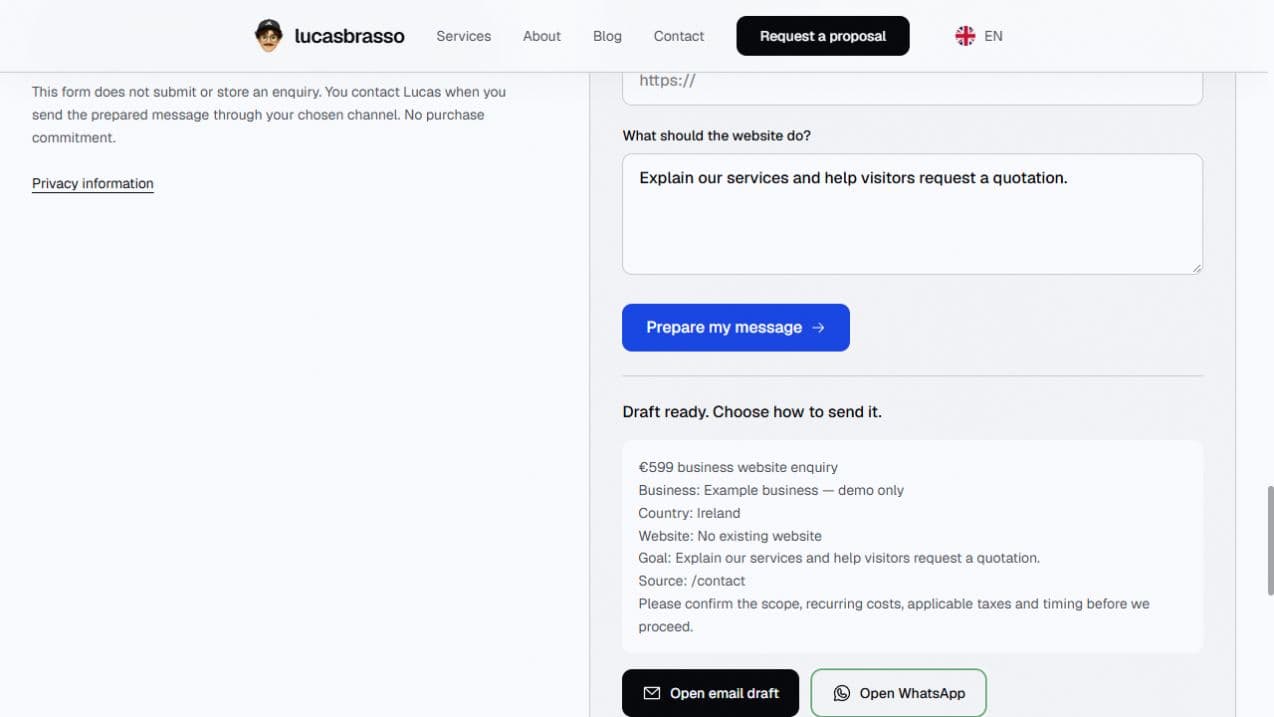
- Information requested
- Business, country, current website and goal
- Prepare my message
- Prepares a message for review; does not send it automatically
- Actual sending
- The visitor opens their chosen channel and sends the message there
Captured from the real website on 30 October 2026 using sample information. No test message was sent. A prepared draft or outbound click is not proof of a delivered enquiry.
What happens when someone uses this form?
The visitor enters a business name, selects a country and describes the goal. An existing website is optional for a new-site enquiry. Clicking Prepare my message builds a readable draft with the selected offer, the information entered and the page where the enquiry started.
The next action belongs to the visitor: Open email draft launches a compatible email application, while Open WhatsApp opens a message addressed to Lucas. The visitor still needs to send it there. If an email application does not open, the page displays a fallback email address so the visitor can copy the draft into their email service.
Do I need a paid CRM to start?
Not every service business needs a CRM integration for its first website. If the main task is a quotation request and you already manage conversations through email or WhatsApp, a clear route into those channels may be enough. The five-page package includes agreed contact links, not a custom sales application.
If you need messages delivered without leaving the page, lead assignment, saved records, attachments, automated follow-ups or synchronisation with a CRM, list those requirements in the brief. They affect development, third-party costs and how customer information is handled. We confirm the scope before including them; this example does not demonstrate those functions.
Which contact action should my website use?
Choose the channel you can reliably monitor. A visible phone link suits a business that answers calls. An existing booking tool may suit appointments. A message-based route can work when you need enough context to assess a project before replying. An unavailable channel can create a frustrating experience even if the page looks polished.
Ask for only the information needed for the next conversation. For this website, business, country and goal help establish scope; the form does not request payment details or credentials. Your own fields should follow your actual service. Any privacy text, retention process and third-party tool responsibilities need to match the final implementation.
How should I test the contact journey before launch?
Use a phone and a desktop browser. Check required fields, prepare the message and confirm the destination address, price and text. Test what happens if no email application is configured. For a backend form, an acceptance check should include receiving a real test message in the agreed inbox and reviewing error behaviour.
Measure the steps separately. Preparing a draft, opening WhatsApp, receiving a message and closing a sale are different events. This site tracks eligible interaction events only after analytics consent; it does not describe a draft as a received lead. The same distinction should be used when discussing your website’s results.
Sources and further reading
Prices describe Lucas Brasso’s own offer, not a market-wide benchmark. These primary sources provide supporting technical guidance.